
Recognized at Last: Susupti’s Journey to a Disability Identity Card
Published: Dec 3, 2025 Reading time: 3 minutes Share: Share an articleToday, as the world marks the International Day of Persons with Disabilities, we celebrate the story of Susupti Raji, a 16-year-old girl from rural Karnali whose quiet courage and determination remind us why inclusion matters.
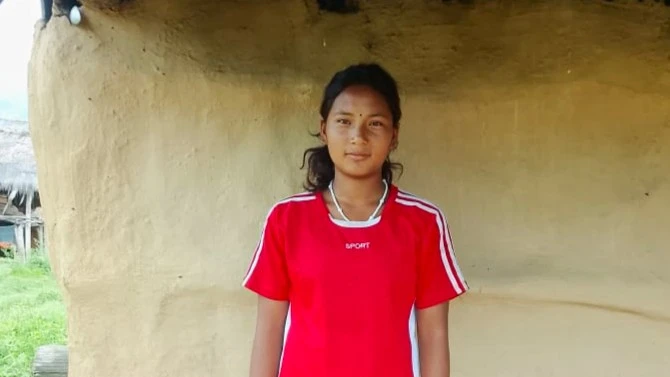
Susupti was only a few months old when a severe burn accident left lasting injuries on her right leg, causing her to lose parts of her foot. Walking was never easy, and as she grew up, she faced teasing from peers and the quiet shame of showing her injured foot in public.
“I used to feel scared to go barefoot in school. Sometimes I stayed silent just to avoid questions or teasing,” Susupti recalls.
Despite these challenges, Susupti never allowed her disability or her family’s economic hardships to stop her from dreaming. Every day, she walks nearly two hours to attend Grade 10 classes at Bheri Secondary School. Her father migrates between Nepal and India for work, while her mother tends their small piece of land. Before and after school, Susupti and her sister help with chores, as their younger brothers are still small. Life has always demanded effort from her, and she has always stepped forward.

For years, neither Susupti nor her family knew about disability ID cards or the benefits they could bring. That changed when the European Union funded ACCESS project (Accelerating Civil Society Role in Securing Education for All), through a local civil society organisation (CSOs), Sundar Nepal Sanstha, conducted awareness and orientation sessions at her school. The project led by People in Need (PIN), with its partners National Campaign for Education Nepal (NCE Nepal), Nepal Disabled Women Association (NDWA), and Accountability Lab Nepal (ALN), aims to strengthen the role of civil society in ensuring equitable education and to build the capacity of CSOs to promote education for marginalized children.
For the first time, Susupti learned what disability rights meant. Her parents learned that a disability card was not a label but a tool for recognition, dignity, and access to essential government services.
With support from the project team, her school and local municipality, Susupti navigated the application process, despite delays and challenges and received her disability ID card at the age of 16.

For her and her family, it was more than a card-it was recognition. It validated her experiences, affirmed her identity as a person with a disability, and opened doors she had long deserved: access to health services, support devices, scholarship opportunities, legal protection from discrimination, and inclusion in local government programs for children with disabilities.
Her principal, Dhan Bahadur Rokaya, reflects on the change in the school community: “Before this, we didn’t know much about disability rights or available support. Now, we are committed to ensuring all students, including those with disabilities, get the help they need. To start with, we relocated the school office to the ground floor for easier access.”
Susupti’s journey reminds us that meaningful change begins with awareness and grows through collective effort. On this International Day of Persons with Disabilities, her story is a powerful reminder that recognition, dignity, and equal opportunity are not privileges- they are rights.


