
Manisha’s Journey of Finding Her Identity
Published: Dec 12, 2025 Reading time: 4 minutes Share: Share an articleManisha Kumari Mahato, 24 years old, from Barahathwa, Sarlahi district, has been married for 4 years now, and her life has completely changed since then.
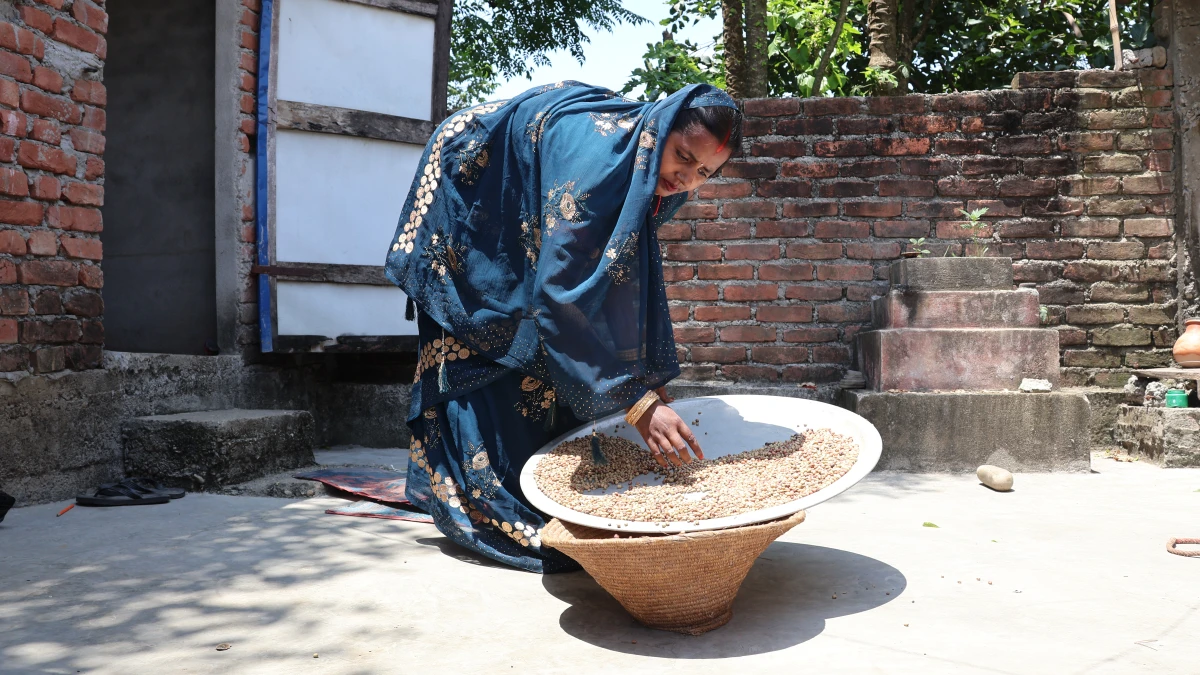
Marriage meant giving up her education and not being allowed to leave the house. Her veil and the four walls of her husband’s home became everything. She spent her days caring for her in-laws, her husband, and her children. Although it felt wrong, she accepted it as her fate as a daughter-in-law.
Everything began to change the day her mother-in-law was invited to attend a Gender Transformative Social Norms (GTSN) session organised by the Security and Justice Programme (SJP), funded by the FCDO Nepal. When she returned, she said something Manisha never expected to hear:

“You should go next time. They talk about important things like gender-based violence and how and where women can go to seek help.”
That single moment opened a new world for Manisha. She counted down the days with excitement.
When the day finally came, she went with a group of women, still under her veil, but out of the house for the first time in years. At the session, no one recognised her. She was just “someone’s wife” or “someone’s daughter-in-law.” That realisation hit hard. She had lost her own identity. But she was there to learn, and that was enough.
From that session, the most powerful lesson she learned was about herself and the world beyond her home.
“Before, if there was a problem, I could only talk to my family,” she recalls. “Now I know there are people who can support me. I can ask for help from my neighbours, and if that doesn’t work, I can go to the panchayat, the ward, or even the court.”
She began sharing what she learned with her family after each session, and slowly, they began to trust her. Soon, she was allowed to attend the sessions on her own.
“After these sessions, my life changed from being inside the house constantly to being allowed to go out and learn. I wanted to be part of this change for someone else,” says Manisha.
Pushing herself out of her comfort zone, she wanted to be a facilitator herself. After proactively showing her interest, she got to attend the training in Bardibas and became a one. Today, she leads sessions and particularly focuses on safe shelters, safeguarding, and the Community Feedback and Response Mechanism/Referrals, which contains important contact numbers for women facing sexual harassment or violence.

Being a facilitator was a game-changer.
Now, her mother-in-law proudly tells everyone that her daughter-in-law is employed and teaches others. Her husband motivates her to study English and plans to buy her a scooter to make travel easier. Her brother-in-law supports her too, encouraging her to take computer classes and promising to bring her a laptop from abroad.

Today, Manisha is continuing her education and is in the third year of her Bachelor’s in Business Administration (BBA). With her family’s support, she has regained her confidence and identity. Continuing her education and earning her own income has given her economic freedom and respect, helping her express herself and walk with her head held high.
She is now a firm believer that these sessions truly help women. “If there has been an issue of sexual violence,” she says, “just because it is not your daughter doesn’t mean you stay quiet, it could happen to anyone. We need to end SGBV. Raising our voices is our right. If not today, then when?”
She often ends her sessions with a message she deeply believes in:
The Gender Transformative Social Norms (GTSN) sessions are organised under the Security and Justice Programme (SJP), funded by the FCDO Nepal, led by People in Need Nepal in partnership with Divya Development Resource Centre (DDRC) and Hami Daju Bhai.


